Big Win: Richmond Rolling Out 30km/h Speed Limits on Local Streets
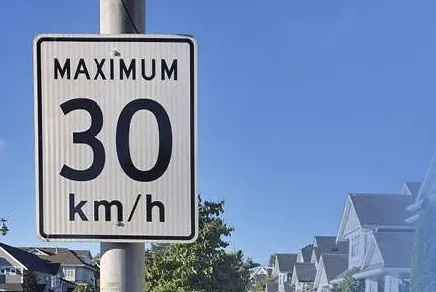
Big Win! As of June 2026, the City of Richmond has rolled out 30 km/h speed limits on local streets across the city to support safer, calmer, and more livable neighbourhood streets.
British Columbia’s province-wide default speed limit on city roads is 50 km/h, but cities can establish lower speed limits through local bylaws. Since 2016, HUB Cycling has made several recommendations to the Provincial Government to better protect people walking, cycling, and rolling as transportation. Reducing residential speed limits to 30km/h is a big win for people who walk, bike, and roll in the City of Richmond.
As part of the campaign to get the new speed limits passed in Richmond, HUB’s Richmond-YVR Local Committee wrote letters to the City Council advocating for the benefits of reduced speeds on local streets. It is the key work of our local committees that can show City Councils that the public will support certain legislation updates and help move those motions forward.
The City of Richmond is currently installing 30km/h signs, with signage expected to be completed in three months. The new signage covers approximately 50 neighbourhoods and about 500 kilometres of roads.
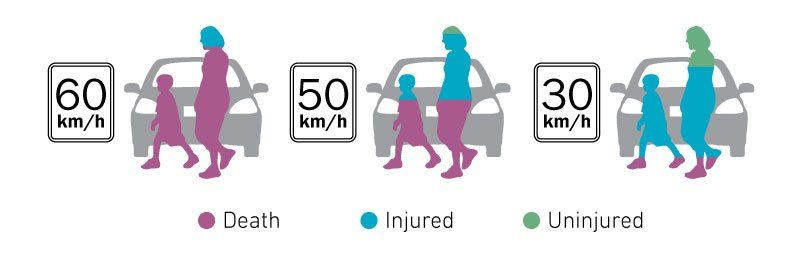
Current research shows that shifting to 30 km/h speed limits in cities can save over 40% of lives in motor vehicle crashes. Researchers have even seen that walking and cycling increase in the areas where speed limits are limited to 30km/h, making this a win for some of our most vulnerable road users. [30km speed limit research paper]
At 50 km/h, the risk of death or serious injury in the event of a collision is significantly elevated. A person struck at this speed is approximately five times more likely to be killed compared to a collision at 30 km/h. Numerous public health agencies, including the World Health Organization and BC’s own Provincial Health Officer, recommend 30 km/h as the appropriate default for neighbourhood streets to protect lives and reduce the burden of injury on our healthcare system.
Most people want slower speeds in their neighbourhoods: in a 2023 survey by the Canadian Automobile Association (CAA), nearly 9 in 10 Canadians (88 per cent) say they are deeply worried about speeding in residential areas.
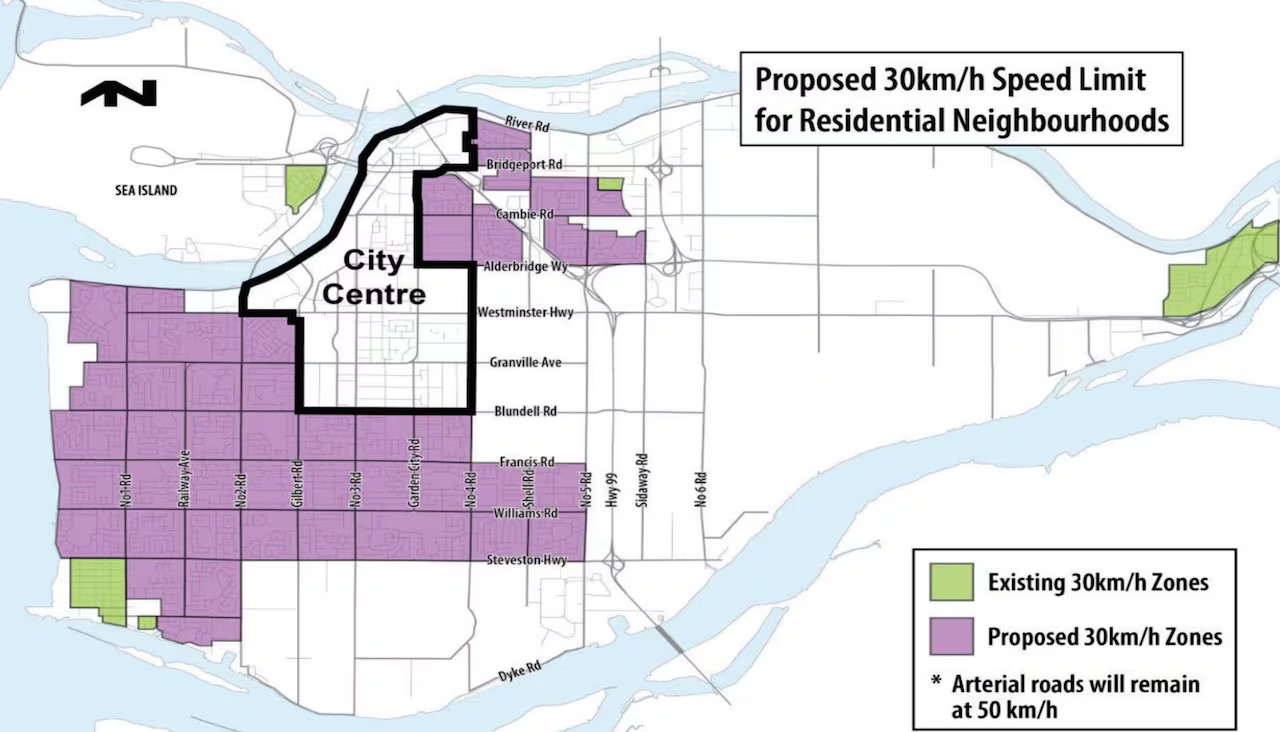
A map indicating the proposed areas where 30 km/h limits will apply to residential streets. Purple indicates new areas in the upcoming bylaw, and green shows zones that already have that cap. [City of Richmond]
Richmond has already implemented 30 km/h limits in many neighbourhoods, including Hamilton, Steveston, Burkeville, Barnes/Flury and Princess/London. This new bylaw supports the City’s transportation safety goals, especially creating a safer environment for people walking and cycling.
Richmond Mayor Malcolm Brodie said, “Many local roads are used every day by residents walking, cycling and travelling to school, parks and nearby destinations. We’re asking drivers to slow down and follow the lower speed limits in residential neighbourhoods. It’s an important step to help support those daily trips and the quality of life in our communities.” [Quote Reference]
Arterial and perimeter roads that support higher traffic volumes, such as Westminster Highway, Granville Avenue and River Road, will remain at 50 km/h.
The City of Richmond is currently installing 30km/h signs, with signage expected to be completed in three months. The new signage covers approximately 50 neighbourhoods and about 500 kilometres of roads.