Event Recap: Bike parking retrofits: Navigating challenges & solutions for micromobility
Exploring how bike parking retrofits can support equitable access to active transportation and contribute to building decarbonization.
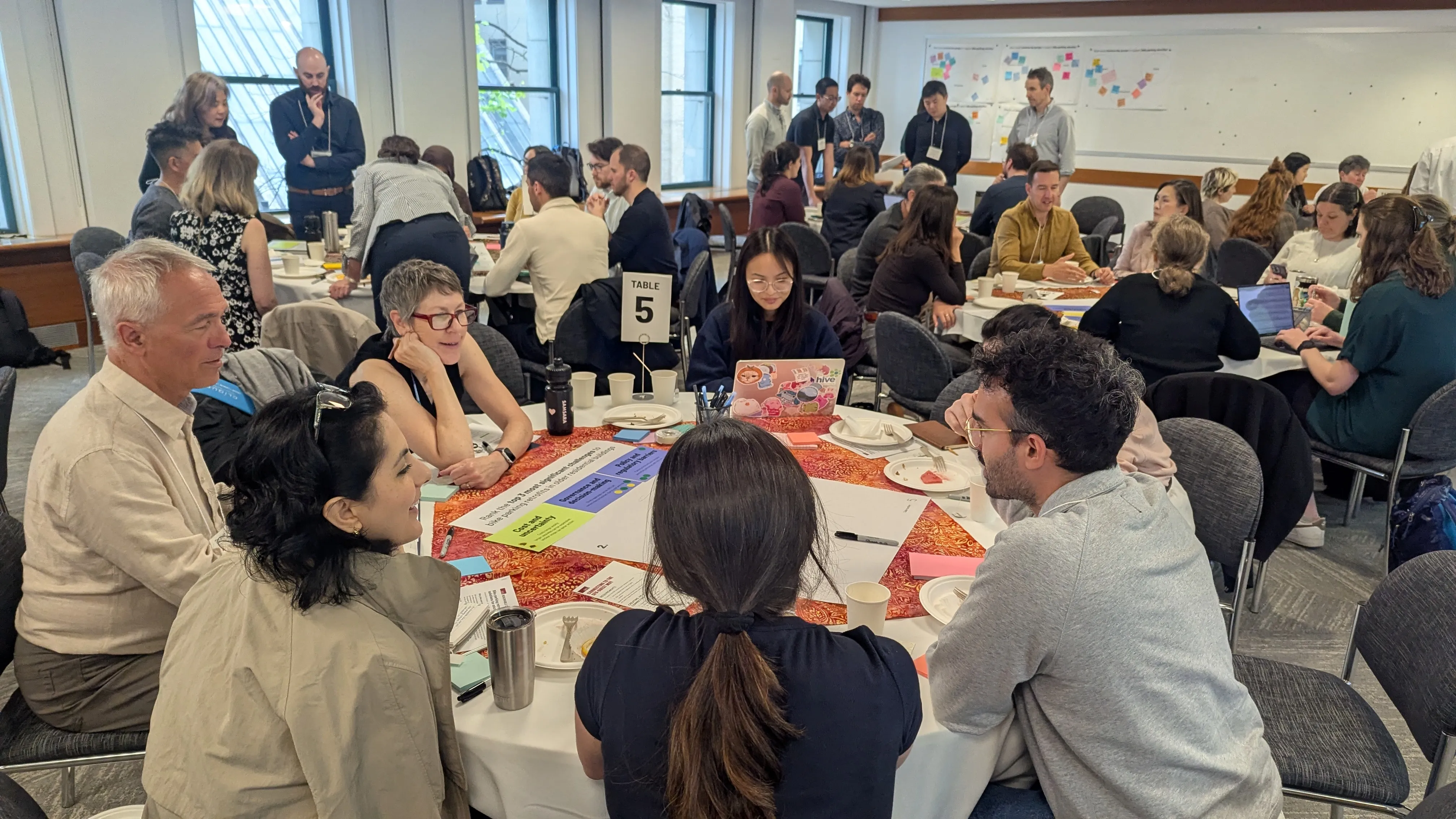
On Thursday, May 7, SFU Renewable Cities, HUB Cycling and the Zero Emissions Innovation Centre hosted 52 professionals from government, housing, and transportation at SFU’s Centre for Dialogue to explore how bike parking retrofits can support equitable access to active transportation and contribute to building decarbonization.
The Problem: A Lack of Bike Parking in Older Buildings
Many older residential buildings lack secure, accessible bike parking. This creates challenges such as theft risk, overcrowding and limited space for different types of bikes. Retrofits help address these gaps, enabling buildings to meet growing demand while supporting safer, more equitable, low‑carbon transportation options.
So why aren’t more older buildings being retrofitted with bike parking? Workshop participants identified three top challenges in order for a retrofit to be approved.
Top Challenges in Building the Case for Bike Parking Retrofits:
- Cost and uncertainty: Owners and stratas are often looking to reduce building costs as strata fees continue to climb. One solution to this is providing funding that could incentivize strata councils and users to advocate for retrofits.
- Competing priorities: Other types of retrofits that may provide more economic benefits in the resale of a property may be prioritized. Often, vehicle parking is prioritized by building users.
- Governance and decision making: Decision makers may not have seen evidence to be convinced that retrofits are worthwhile. One solution is to show decision makers the demand and value of parking for micromobility devices, and the potential to address affordability, climate, and other issues.
Potential Solutions: How Can We Make Bike Parking Retrofits a Reality for More Buildings?
Workshop participants brainstormed some strategic actions to address the above challenges:
- Creating dedicated funding streams: Congestion pricing, parking fees, redirecting funds from related departments, rebate programs, and non-profit housing funders are all funding streams that could move the needle forward towards approving a bike parking retrofit.
- Building awareness and capacity: Case studies of successful bike parking retrofits, feasibility studies, and tenant resources for advocating for retrofits help build the case that bike parking retrofits are a worthwhile investment.
- Local government leadership and coordination: Streamlining the process in permitting and processing, creating spaces for cross-jurisdictional collaboration, and championing bike parking as an ideal could lead to a more favorable adoption of retrofits.
What’s Next
HUB Cycling and the Zero Emission Innovation Centre are seeking and exploring new partnerships. Contact us at bfb@hubcycling.ca to discuss how your organization can support retrofits of previously assessed buildings, conduct needs assessments, provide technical recommendations regarding bike parking retrofits for buildings that provide housing to disadvantaged populations.
To learn more about this retrofit program, visit here.